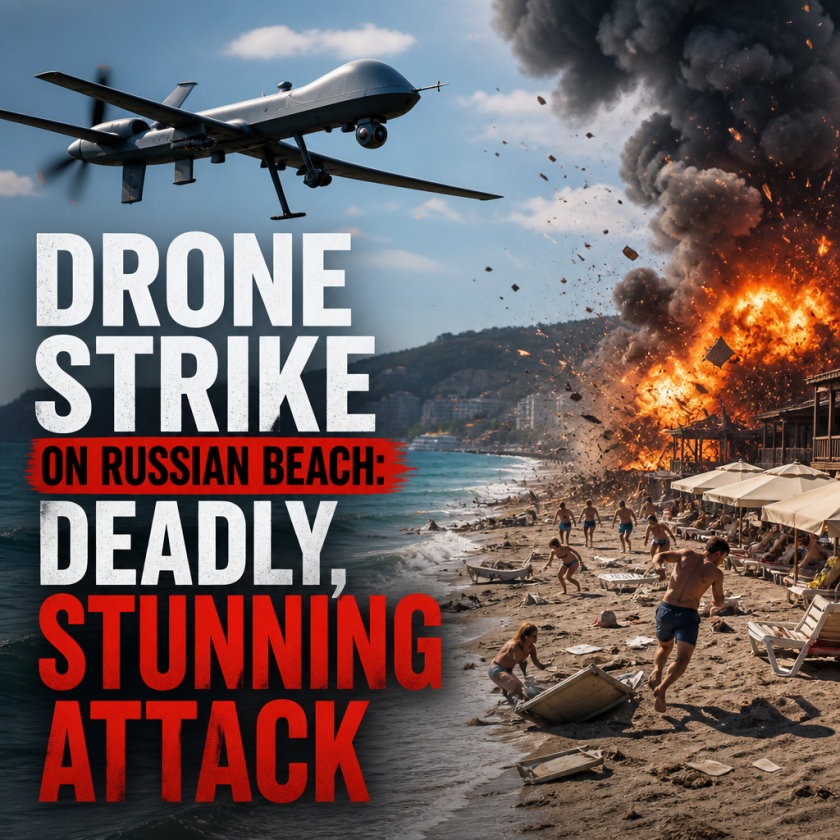
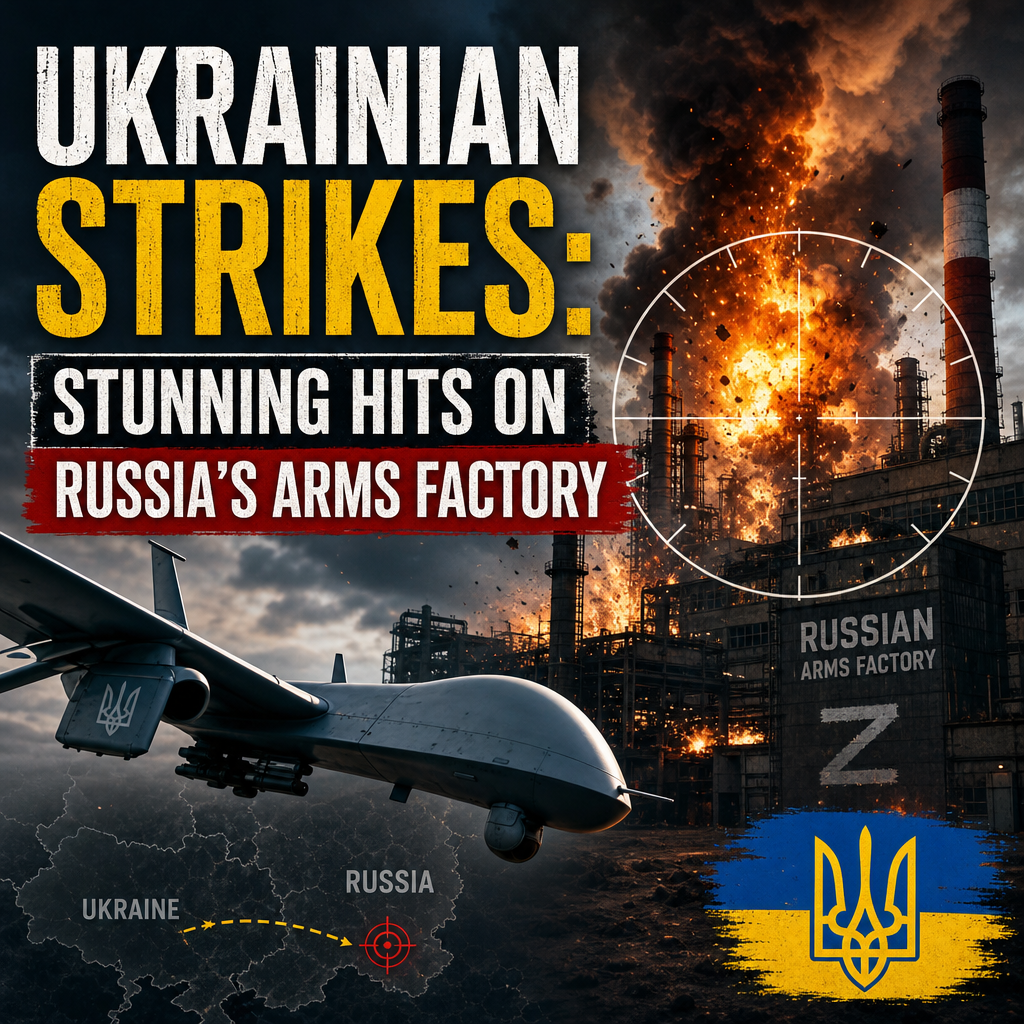
Ukrainian Strikes: Stunning Hits on Russia’s Arms Factory


Ukrainian strikes deep inside Russia have once again shown how far this war has moved beyond the front line, with reports of damage to an arms factory and an oil refinery raising fresh questions about Moscow’s defenses, Kyiv’s strategy, and the broader limits of escalation.
The latest attacks matter not only because of the scale of the targets, but because of what they represent: a shift in the war toward pressure on the Russian military-industrial base itself. That makes these strikes more than symbolic. They are part of Ukraine’s effort to disrupt the machinery that sustains Russia’s invasion, while also signaling that distance is no longer a reliable shield for critical infrastructure.



Ukrainian strikes and the changing battlefield
According to reporting from Sky News, Ukrainian drones hit facilities deep inside Russia, including an arms factory and an oil refinery. That framing reflects a key theme running through much of the coverage: the strikes were notable for their reach, not just their damage. If confirmed at the scale described, they would underscore Ukraine’s growing ability to project force far beyond the immediate war zone.
Al Jazeera’s broader war coverage often places such incidents within the larger pattern of the conflict rather than treating them as isolated events. From that perspective, strikes on infrastructure are part of an increasingly attritional contest in which both sides seek to weaken the other’s war-making capacity. Ukraine has repeatedly argued that hitting Russian energy and defense assets is a legitimate response to the invasion and a way to reduce the pressure on its own cities and troops.




That said, the strategic effect is not always straightforward. Damaging a refinery or factory can create immediate disruption, but it does not necessarily alter the overall balance of the war overnight. Russia has shown an ability to repair, reroute, or absorb some losses, especially when attacks are dispersed rather than concentrated. The deeper question is whether repeated strikes can create lasting strain on logistics, fuel supply, weapons production, and morale.
What the reports suggest about Russia’s vulnerabilities
The fact that the reported targets were in the Russian interior is important. For Moscow, attacks on areas far from the front are politically sensitive because they challenge the image of control that the Kremlin wants to project. For Russian audiences, such strikes can be unsettling even when official statements emphasize that air defenses intercepted many drones or that damage was limited.
RT, which generally reflects a Russian state-aligned perspective, tends to emphasize the defensive angle in such situations. In its coverage, the focus is usually on air defense activity, the interception of drones, and the rapid containment of damage. That approach is worth noting because it highlights how differently the same event is framed depending on the source: one side stresses Ukrainian reach and battlefield innovation, the other stresses Russian resilience and the limited strategic impact of the attack.
These contrasting narratives are part of the information war surrounding the conflict. Ukraine wants to show that it can impose costs on Russia and not merely absorb them. Russia, meanwhile, wants to reassure its public and allies that such attacks do not threaten the state’s core security. The truth likely sits somewhere between those positions: the attacks do not appear to be war-ending blows, but they do expose vulnerabilities that Russia cannot fully ignore.
Three takeaways from the coverage
– Ukraine is demonstrating reach. Hitting strategic targets deep inside Russia suggests a more capable long-range strike posture than earlier in the war.
– Russia is trying to contain the narrative. State-aligned coverage generally minimizes damage and emphasizes air defenses and continuity.
– The real effect is cumulative. One strike may not change the war, but repeated attacks on fuel and military production could complicate Russia’s operations over time.
Why the strikes matter beyond the headlines
The deeper significance of these Ukrainian strikes is that they blur the old distinction between battlefield and rear area. In conventional wars, factories, refineries, and logistics hubs are often treated as safer than the front. This war has not followed that rule. Drones, missiles, and evolving targeting systems have made distance less protective than before.
For Ukraine, that creates both opportunity and risk. The opportunity is obvious: forcing Russia to defend a wider territory, potentially stretching its air defenses and resources. The risk is equally real: escalation, retaliatory strikes, and the possibility that attacks on energy infrastructure could harden Russian resolve rather than weaken it.
There is also the question of international reaction. Western governments that support Ukraine generally understand the need to degrade Russia’s war capacity, but they remain cautious about any move that could be interpreted as widening the conflict too far or hitting targets that could trigger a broader response. That ambiguity is one reason why every successful deep strike attracts attention well beyond the immediate battlefield.
The most responsible reading of the reports is not that Ukraine has suddenly transformed the war, nor that Russia is helpless. It is that the conflict has entered a phase where industrial, energy, and military targets are increasingly intertwined with the fighting itself. That makes the war more unpredictable and, in some ways, more dangerous.
A conflict defined by pressure, not certainty
What is clear from the reporting across Sky News, Al Jazeera, and RT is that each side is trying to shape the meaning of these attacks as much as the military outcome. Ukraine presents them as proof of capability and justified retaliation. Russia portrays them as manageable and often exaggerated. Independent observers are left trying to separate verified damage from wartime messaging.
The most balanced conclusion is that these strikes are significant, but their long-term impact remains uncertain. They reveal Ukrainian ingenuity and persistence, but also the limits of what drones and long-range attacks can achieve against a large adversary. They expose weaknesses in Russian security, while also showing how quickly Moscow can move to control the story.
In that sense, the attacks are both a battlefield event and a signal of how the war is evolving: less about front lines alone, and more about whether each side can sustain pressure on the other’s economic and military backbone.